
The Galleria Borbonica is a large underground tunnel built in the 19th century under the Bourbon kings of Naples. Originally designed for military use, it later served as a World War II air-raid shelter, preserving visible traces of life during the bombings.
Today, it can be visited only with a guided tour and offers a very different experience from other underground routes in Naples. Although part of the wider underground of Naples, the Galleria Borbonica is a separate site with its own entrance, history, and guided visit.
Tickets for the Galleria Borbonica
🛡️ Secure transaction - Tickets sold by Tiqets.
What Is the Galleria Borbonica?
The Galleria Borbonica is a long underground tunnel system excavated in the mid-1800s during the Bourbon period. It was commissioned by King Ferdinand II as part of a military escape route connecting key areas of Naples, allowing the royal family and troops to move unseen beneath the city.
The project was never fully completed and was gradually abandoned. Decades later, the tunnel took on a completely different role: during World War II, it became a vital air-raid shelter for Neapolitan civilians seeking protection from bombings.
Today, visitors walk through a space shaped by multiple historical layers:
- 19th-century engineering works
- Wartime shelters carved into the rock
- Objects, vehicles, and traces left behind underground
Unlike other underground sites in Naples, the Galleria Borbonica is defined less by ancient origins and more by its modern history and atmosphere, making it especially compelling for visitors interested in Naples during the 1800s and WWII.
Galleria Borbonica During World War II
During World War II, the abandoned tunnel was repurposed as a large air-raid shelter for the civilian population of Naples. As bombing raids intensified, thousands of residents took refuge underground, often spending hours — and sometimes entire nights — inside the tunnel.
To make the space livable, parts of the Galleria Borbonica were adapted with:
- Sleeping areas carved into the rock
- Basic lighting and ventilation
- Makeshift living spaces for families
Many of the objects left behind during this period are still visible today. Visitors can see vehicles, everyday items, graffiti, and personal traces that offer a rare and direct connection to life in Naples during the war.
This wartime use is what gives the Galleria Borbonica its distinctive character. Rather than focusing on ancient history, the visit explores a much more recent and human chapter of the city’s past — one that feels immediate, tangible, and often moving.
How the Galleria Borbonica Visit Works
Visits to the Galleria Borbonica take place exclusively as guided tours. There is no free or self-guided access, and all visitors follow a defined route led by an official guide.
The tour focuses on the main tunnel system, combining Bourbon-era engineering with the site’s later use as a World War II air-raid shelter.
Galleria Borbonica Tickets & Prices
Tickets for the Galleria Borbonica are sold for a single official guided tour, as the site is managed independently and has its own entrance and schedule. All visits take place exclusively with an authorized guide and include access to the main underground tunnel.
When booking tickets, it’s important to select the correct date, time, and language, as entry is only possible at the scheduled tour time and tickets cannot be used for other underground sites in Naples.
Tickets for the Galleria Borbonica
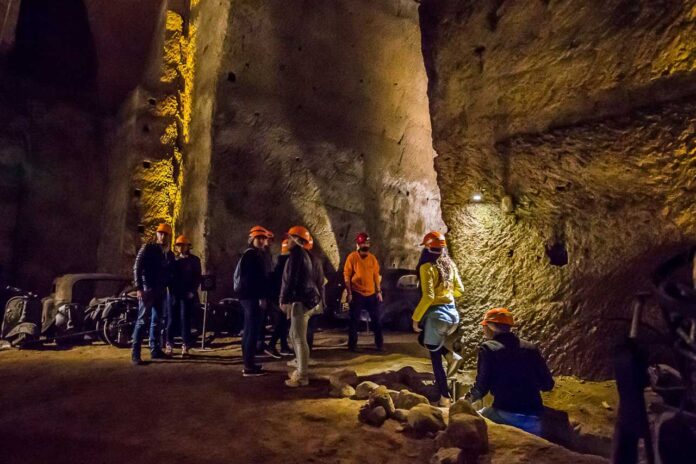
The standard ticket includes a guided tour through the main underground tunnel, with explanations covering both the 19th-century Bourbon project and the site’s role during World War II.
Typical ticket features:
Price:
15 €
Reduced (11-13 years old): 10 €
🛡️ Secure transaction - Tickets sold by Tiqets.
Planning Your Visit to the Galleria Borbonica
Where does the Galleria Borbonica tour start?
The guided tour of the Galleria Borbonica starts at the official entrance, located near the Piazza del Plebiscito area.
The exact meeting point and access instructions are provided on your ticket confirmation after booking. Visitors are advised to arrive at least 10–15 minutes before the scheduled start time.
Other practical information
Planning ahead helps you get the most out of your visit, as the Galleria Borbonica is only accessible with a guided tour and places are limited per group.
How the Galleria Borbonica Tour Differs From Other Underground Sites in Naples
Naples is home to several underground sites, but they offer very different experiences. The Galleria Borbonica stands out for its modern history and atmosphere, rather than ancient origins.
Galleria Borbonica vs other underground tours
Which underground visit is right for you?
Choose the Galleria Borbonica if you’re interested in:
- World War II history
- Civilian life during air raids
- Large, atmospheric underground spaces
Consider other underground routes if you’re more interested in:
- Ancient engineering
- Roman-era structures
- Classical archaeology
This distinction helps visitors choose the experience that best matches their interests, as there is no single “Naples Underground” tour that covers everything.
Is the Galleria Borbonica Worth Visiting?
For many visitors, the Galleria Borbonica is one of the most memorable underground experiences in Naples — but it is not for everyone.
It’s worth visiting if you:
- Are interested in World War II history
- Want to understand how civilians lived during air raids
- Prefer modern history over ancient archaeology
- Enjoy atmospheric, story-driven visits
The combination of large underground spaces, preserved wartime objects, and personal stories makes the experience emotional and immersive, rather than purely educational.
You might want to skip it if you:
- Are mainly interested in ancient Roman or Greek sites
- Prefer bright, open attractions
- Are uncomfortable in enclosed or dimly lit spaces
- Have limited mobility and find stairs difficult
Being clear about who the visit is not for helps set the right expectations and ensures a better experience for those who do go.
Galleria Borbonica – FAQ
What is the Galleria Borbonica?
The Galleria Borbonica is a large underground tunnel in Naples built in the 19th century during the Bourbon period.
It was originally designed for military purposes and later reused as a World War II air-raid shelter for civilians.
Is the Galleria Borbonica part of Naples Underground?
The Galleria Borbonica is often mentioned as part of Naples Underground, but it is a separate site.
It has its own entrance, history, and guided tours, and it is not the same experience as Napoli Sotterranea or other underground routes.
Can you visit the Galleria Borbonica without a guide?
No. All visits to the Galleria Borbonica take place as guided tours.
Independent access is not permitted for safety and preservation reasons.
How long does the Galleria Borbonica tour last?
Most guided tours last approximately 60 to 90 minutes, depending on the group and schedule.
Is the Galleria Borbonica suitable for children?
The visit can be suitable for older children and teenagers, especially those interested in history.
Very young children, strollers, or visitors uncomfortable with dark and enclosed spaces may find the experience less suitable.
Is the Galleria Borbonica safe to visit?
Yes. Tours follow fixed routes and are led by authorized guides.
Visitors should expect stairs, uneven surfaces, and low lighting, which are typical for underground sites.